Eric Wu, online predator
Just One LookEric Wu uses online intimacy as a hunting method: he creates false identities, cultivates many conversations at once, and selects people whose isolation makes them easier to approach and less likely to be missed. His encounter with Freddy Sykes shows how carefully he builds a plausible persona before turning contact into violence; his later confrontation with Rocky Conwell and disposal of evidence show the logistical care behind that predation.
Identity and Method
Wu operates seven online accounts under invented male and female personas. He maintains an average of six potential dates through each account, corresponding with as many as forty or fifty people at a time. The accounts are spread across different kinds of personals sites: three general straight sites open to any age, two for people over fifty, one for gay men, and one for lesbians seeking committed relationships. The variety lets him pose as someone who belongs in several different dating worlds rather than relying on a single fabricated identity.
His approach is patient and selective. He gradually gathers information from those he contacts, using their disclosures to decide whether to pursue them or abandon the conversation. At first, he targets women, whom he considers easier victims. He then expands his attention to men, reasoning that men are less likely to fear rape or stalking and therefore may take fewer precautions. The account frames this not as a search for intimacy or sexual gratification—Wu receives none from his work—but as an assessment of vulnerability.
Isolation is central to his selection process. People with children, nearby relatives, roommates, demanding jobs, or many close friends do not fit his requirements. He seeks people who are lonely and also cut off from the ordinary relationships that might bring help or prompt someone to notice their absence. In this instance, he additionally needs a target close to the Lawson household, making geography part of his calculation as well as personal vulnerability.
Freddy Sykes and the False Persona
Wu identifies Freddy Sykes as a suitable target through BiMen.com. Freddy is forty-eight and works for a storefront tax-filing company in Waldwick, New Jersey. Both his parents have died, he has no siblings, and he inherited his Ho-Ho-Kus home after caring for his mother. She died two years earlier; the house is only three miles from the Lawson residence. Freddy’s circumstances match Wu’s requirements of isolation and proximity.
For three weeks, Freddy has been corresponding with Al Singer, one of Wu’s invented identities. Singer is presented as a fifty-six-year-old retired Exxon executive who had been married for twenty-two years before acknowledging an interest in men as well as women. His supposed interests—European travel, fine dining, and televised sports—supply the details of a plausible, ordinary life. Wu uses a photograph taken from a YMCA online catalogue, choosing a man who appears athletic but not conspicuously handsome. The persona is designed not to impress Freddy with glamour, but to make the fiction credible enough to be accepted.
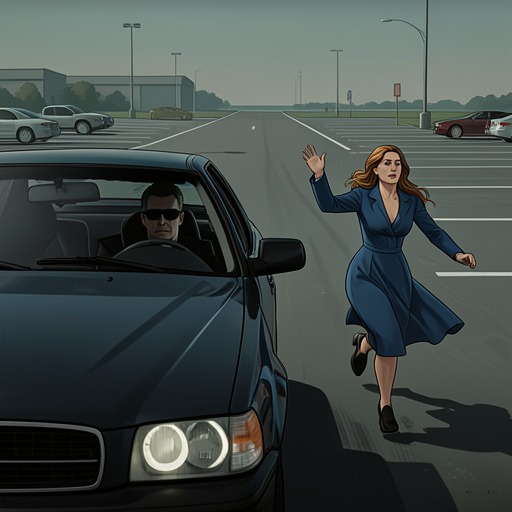
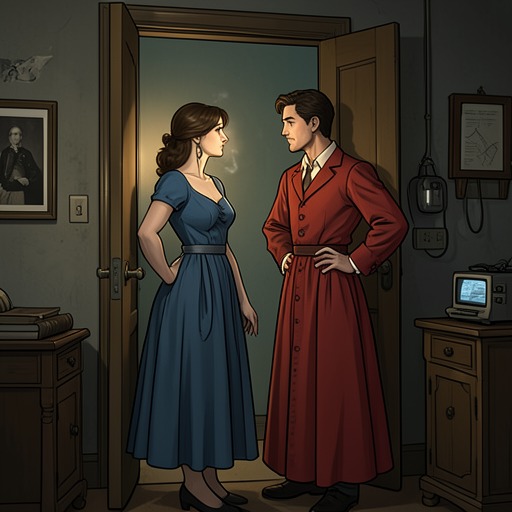
When Wu arrives, the note is attributed to Mr. Singer. Freddy’s question about who sent it gives Wu the opening to repeat the invented name; Freddy then opens the deadbolt. Wu immediately attacks him and enters the house. The brief exchange completes the transition from weeks of fabricated courtship to physical control: the false relationship has done its work before Freddy recognizes the danger.
Wu leaves Freddy alive but unable to move, gagged and in the bathtub. The injury is deliberate and calibrated: Freddy can breathe, but cannot use his legs or his hands and lower arms. Wu has tested what he has done and considers Freddy, for practical purposes, paralyzed. Keeping him in the tub also serves Wu’s stated concern with containing the mess. The scene makes his violence appear not as an uncontrolled outburst but as an act organized around the victim’s helplessness and the management of its consequences.
Rocky Conwell and the Management of Risk
Wu’s control is challenged when Rocky Conwell discovers that a man has been shut in a trunk and says he has seen him. A child acknowledges Rocky’s observation and glances toward the trunk; Rocky does the same. Wu attacks at that moment. Rocky does not see the first blow, and although he has endured violence before, Wu’s attack leaves him in severe pain. The encounter exposes the danger Rocky poses to Wu’s secrecy: he has seen evidence of Jack Lawson’s captivity and is attempting to intervene.
By the following night, Rocky is dead, and Wu has to deal with both a body and another car. Wu packs Rocky into the trunk of his Toyota Celica, then moves Jack, who had been placed in the trunk of a Honda Accord, into the back of a Ford Windstar. The shift in vehicles is part of a broader effort to keep both men out of sight and reduce the chance that a single car will lead investigators to them.
Wu changes the Windstar’s license plates, removes its E-ZPass, and drives it back to Ho-Ho-Kus, parking it in Freddy’s garage. He searches Rocky’s car, makes sure it has been cleared out, and leaves it in a remote part of the Route 17 Park-n-Ride, where a vehicle might remain unnoticed for days or weeks. He walks the three miles back to Freddy’s house, takes a bus to Central Valley the next morning, retrieves Freddy’s Honda Accord, and detours past the Lawson residence on his return. These successive changes of vehicle, location, and route show the practical side of his violence: he is not only selecting and restraining victims but also trying to control the traces each crime leaves behind.
Narrative Role
Wu’s online personas connect the novel’s ordinary social routines to the threat facing Freddy and the Lawsons. Profiles, messages, a photograph, and a note appear to offer the beginnings of a relationship; in Wu’s hands, each becomes a tool for assessing access and lowering suspicion. His invented identity is not a separate disguise used only at the moment of attack. It is a process, sustained through repeated correspondence and tailored details, that makes the eventual approach possible.
The contrast between Wu’s calculated patience and the speed of his attacks defines his role in these episodes. He spends weeks learning whether a target is suitably alone, then acts without hesitation when the opportunity arrives. When another person interferes, the same controlled approach extends to vehicles, license plates, toll equipment, and travel. Wu’s danger lies in the way he treats both relationships and their aftermath as problems of access and concealment: people become targets to assess, while evidence becomes something to move, remove, or leave where it may not soon be found.